- Home
- Onsite Recruitment
Onsite Recruitment
Dedicated onsite recruitment support, embedded within your operation
Onsite Recruitment supporting high volume operations.
Onsite recruitment brings dedicated recruitment expertise directly into your workplace, helping businesses manage high-volume hiring, changing workforce requirements and the day-to-day demands of temporary recruitment.
Rather than managing recruitment remotely, an onsite recruitment team works closely with operational managers to understand workforce numbers, shift requirements, skills, candidate availability and upcoming demand. This creates a more responsive recruitment model built around what is actually happening within the operation.
Corr Recruitment provides onsite recruitment support across warehousing, logistics, manufacturing, food production and other high-volume workforce environments. From candidate attraction and screening through to onboarding, workforce planning and peak recruitment, our teams help create a more consistent pipeline of suitable workers.
What Is Onsite Recruitment?
Onsite recruitment places dedicated recruitment support within, or directly alongside, a client’s operation. The model is particularly suited to businesses recruiting significant numbers of temporary workers, operating multiple shifts or experiencing regular changes in workforce demand.
Having recruitment support closer to the operation enables faster communication between recruitment and operational teams. Requirements can be understood earlier, candidate pipelines can be planned around expected demand and recruitment activity can respond more quickly when circumstances change.
Depending on the operation, onsite recruitment support can include:
- Candidate attraction and recruitment campaigns
- Candidate screening and selection
- Workforce forecasting and recruitment planning
- Shift and skills requirements
- Candidate onboarding and induction
- Compliance and eligibility checks
- Temporary worker communication
- Recruitment for seasonal and peak demand
- Candidate pipeline management
- Ongoing recruitment reporting
The aim isn’t simply to place more workers. It’s to create a recruitment process that is closer to the operation and better able to respond to changing workforce requirements.
From Recruitment To Workforce Support
For businesses requiring a broader level of day-to-day workforce coordination, Corr’s Onsite Managed Services model extends onsite recruitment into ongoing workforce support, including attendance, worker communication, shift coordination, issue escalation and workforce visibility.
Attract
Build candidate pipelines around workforce demand,
Screen
Identify suitable workers for the role and environment.
Onboard
Prepare candidates before their first shift.
Plan
Align recruitment activity with forecast requirements.
Support
Maintain communication throughout assignments.
Respond
Adapt recruitment as operational demand changes.
When Does Onsite Recruitment Make Sense?
Onsite recruitment can be particularly effective where recruitment volumes, shift patterns or changing workforce requirements create additional pressure for operational teams.
It may be appropriate when a business is:
- Recruiting significant numbers of temporary workers
- Operating across multiple shifts
- Experiencing regular changes in workforce demand
- Preparing for seasonal or peak periods
- Managing frequent recruitment or onboarding
- Looking to improve candidate availability and retention
- Spending significant management time coordinating recruitment
- Seeking better visibility of recruitment activity and future workforce requirements
The right model depends on the size and complexity of the operation. Where a permanent onsite presence isn’t required, Corr can also provide structured offsite recruitment and workforce support built around many of the same principles.
How Corr's Onsite Recruitment Model Works
For businesses requiring a broader level of day-to-day workforce coordination, Corr’s Onsite Managed Services model extends onsite recruitment into ongoing workforce support, including attendance, worker communication, shift coordination, issue escalation and workforce visibility.
1
UNDERSTAND
Start with the operation
We look at workforce numbers, roles, skills, shifts, recruitment patterns and anticipated demand to understand what the operation actually needs.
2
ATTRACT & RECRUIT
Build a candidate pipeline
Recruitment activity is planned around workforce requirements, using local labour-market knowledge and targeted candidate attraction to build suitable worker pipeline.
3
ONBOARD & PREPARE
Get people ready for work
Screening, compliance checks, onboarding and induction support help ensure candidates understand the role, environment and expectations before starting.
4
REVIEW & RESPOND
Keep recruitment aligned with demand
Recruitment activity can be adjusted as volumes, shifts and operational requirements change, helping maintain workforce availability when it’s needed.
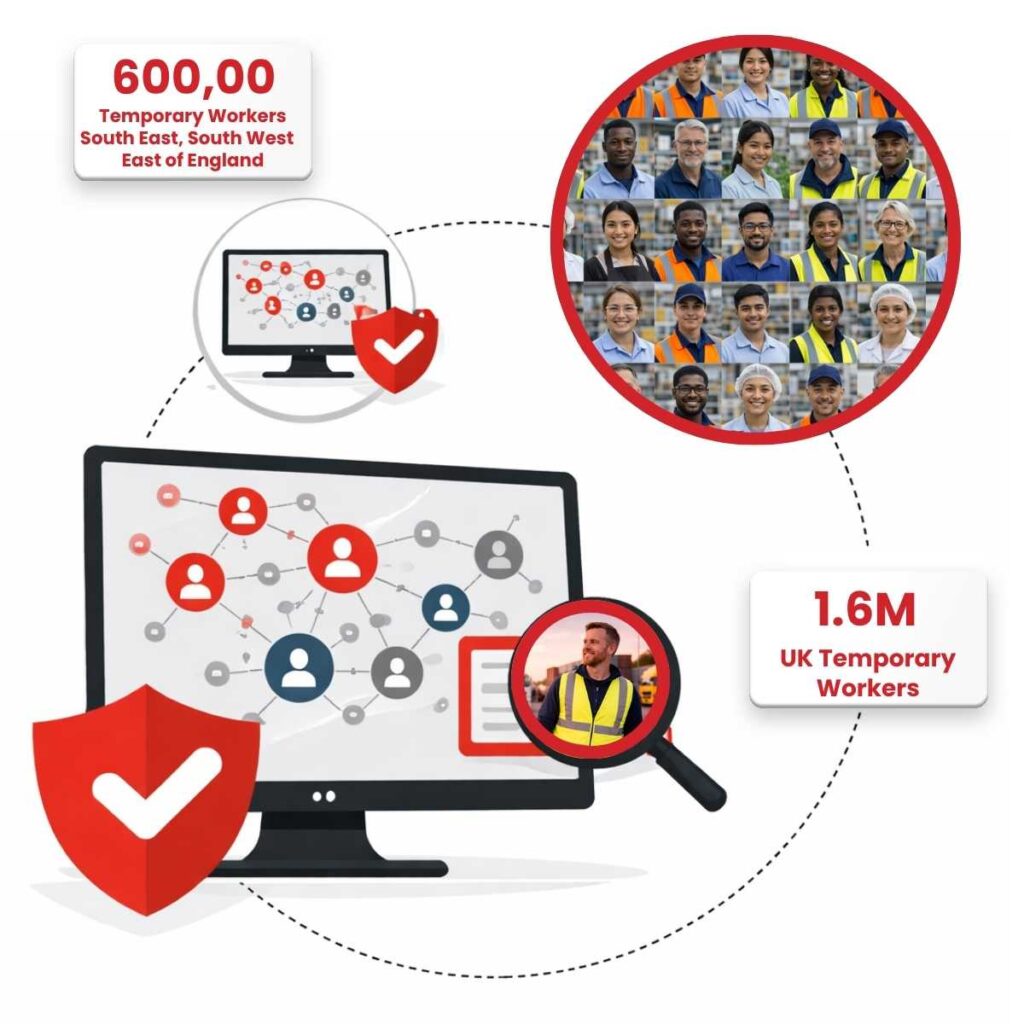
Better Recruitment Visibility
When recruitment is managed closer to the operation, businesses gain a clearer picture of what is happening across their workforce pipeline.
Rather than responding to vacancies only when gaps appear, onsite recruitment can provide greater visibility of candidate availability, upcoming requirements, recruitment progress and potential pressure points.
For businesses managing larger temporary workforces, Corr’s Temporary Workforce Management service extends this visibility across the wider workforce operation.
This can support better decisions around:
Candidate availability
Understanding the size and suitability of the available worker pool.
Fill requirements
Tracking recruitment against planned workforce numbers.
Future demand
Preparing candidate pipelines ahead of anticipated increases.
Retention
Identifying where repeated replacement recruitment may indicate a wider issue.
Recruitment performance
Understanding which attraction and recruitment activity is delivering suitable workers.
Onsite Recruitment for Peak and Changing Demand
Workforce requirements don’t always change gradually. Seasonal peaks, promotional activity, new contracts, increased production and unexpected absence can create significant recruitment requirements within relatively short periods.
Onsite recruitment allows recruitment activity to remain closely connected to operational demand. By understanding anticipated workforce numbers and potential pressure points earlier, candidate attraction and recruitment can begin before additional workers are required.
This can help businesses:
- Build candidate pipelines ahead of peak
- Prepare for additional shifts or increased volumes
- Identify potential recruitment gaps earlier
- Respond quickly when requirements change
- Reduce reliance on last-minute recruitment
- Maintain communication between recruitment and operational teams
For businesses with predictable seasonal demand, our Peak Workforce Planning approach provides additional support around forecasting, candidate availability and contingency planning.
Onsite Recruitment Across High-Volume Sectors
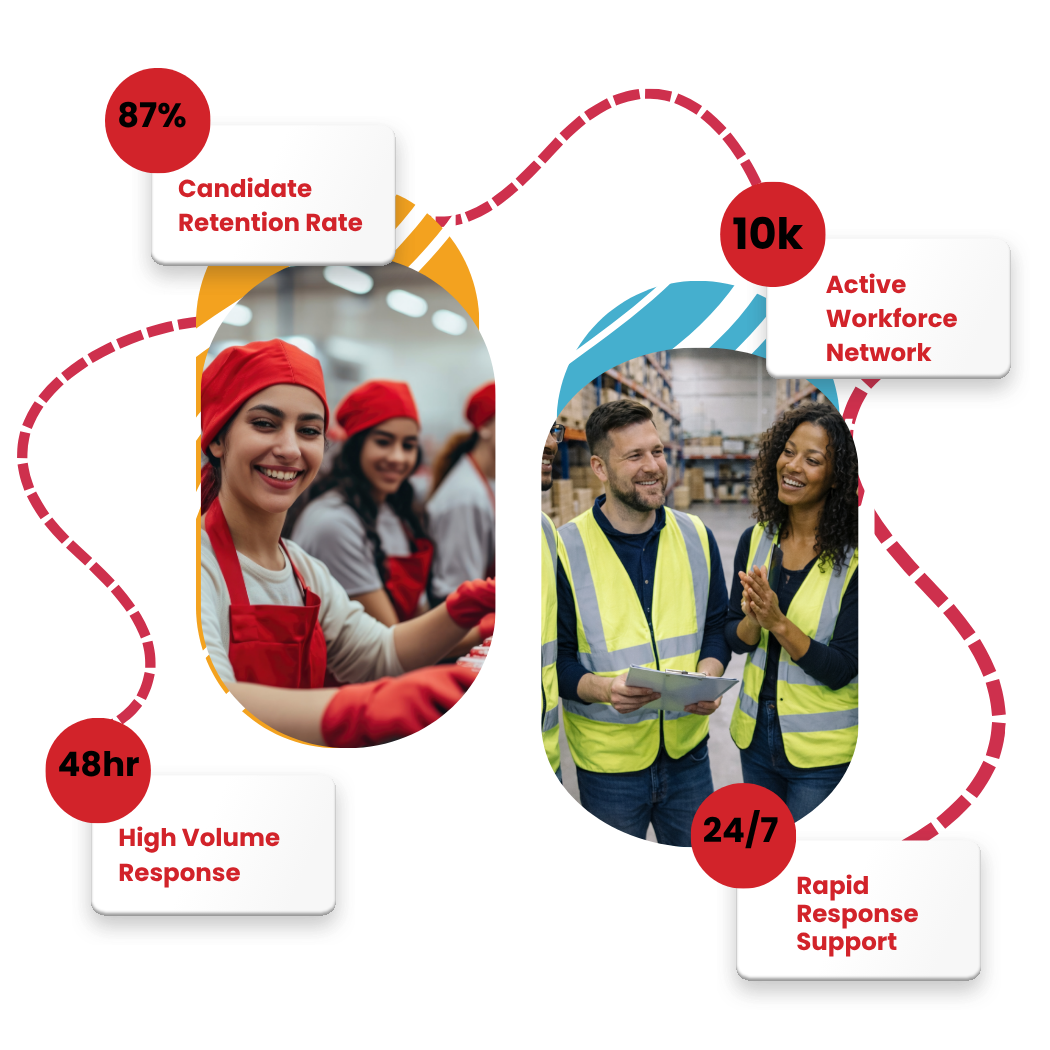
Corr’s onsite recruitment model can be adapted around different working environments, workforce requirements and operational pressures.
Warehousing & Distribution
High-volume recruitment support for warehouse, fulfilment and distribution operations where workforce requirements can change quickly.
Logistics & 3PL
Recruitment aligned with shift patterns, fulfilment volumes, customer requirements and periods of increased operational demand.
Manufacturing & Industrial
Recruitment support built around production schedules, skills requirements, shift coverage, compliance and workforce continuity.
Food Production
Flexible recruitment for fast-moving food production environments where workforce availability, compliance and reliable shift coverage are essential.
E-commerce & Fulfilment
Scalable recruitment support for operations responding to changing order volumes, promotional activity, packaging and seasonal peaks.
Compliance Built Into Onsite Recruitment
When recruitment volumes increase, maintaining consistent recruitment and compliance processes becomes increasingly important.
Corr integrates compliance into the recruitment and onboarding process, helping ensure workers are appropriately checked and prepared before entering an assignment. This includes areas such as Right to Work checks, candidate documentation, role requirements and consistent onboarding processes, supported by Corr’s wider compliance and governance framework.
This includes areas such as eligibility to work, candidate documentation, role requirements and consistent onboarding processes, supported by Corr’s wider compliance and governance framework.
Having structured processes in place helps businesses scale recruitment without compromising the standards expected across the workforce.
Recruitment That Supports Retention
Successful onsite recruitment isn’t only about how many people start. How many stay matters too.
Clear information before a worker starts, realistic expectations about the role and shift, effective onboarding and ongoing communication can all influence whether somebody remains on assignment.
By keeping recruitment closer to the operation, potential issues can also become visible earlier, helping reduce unnecessary replacement recruitment and supporting a more stable workforce.
For larger temporary workforces, this can form part of a broader approach to worker support and workforce continuity.
Onsite Recruitment FAQs
What is onsite recruitment?
Onsite recruitment places dedicated recruitment support within, or closely alongside, a client’s operation. The recruitment team works directly with operational managers to understand workforce requirements, recruit and onboard workers and respond to changing demand.
When does a business need onsite recruitment?
Onsite recruitment is particularly useful for businesses managing high-volume temporary workforces, multiple shifts, regular recruitment or significant seasonal peaks. It can also help where recruitment coordination is taking up considerable operational management time.
How is onsite recruitment different from using a traditional recruitment agency?
A traditional recruitment agency will usually manage recruitment remotely. With onsite recruitment, recruitment support is much closer to the day-to-day operation, providing greater understanding of workforce requirements, shift patterns, candidate availability and changing demand.
How many temporary workers do you need for onsite recruitment?
There isn’t a fixed number. The right approach depends on workforce volume, recruitment frequency, shift complexity and the level of support required. Corr can assess the operation and recommend whether dedicated onsite support or a structured offsite model would be more appropriate.
What does an onsite recruitment team manage?
Support can include candidate attraction, screening, compliance checks, onboarding, induction, recruitment planning, candidate pipelines, worker communication and recruitment reporting. Where broader workforce coordination is required, this can extend into Corr’s Onsite Managed Services model.
Can onsite recruitment help with seasonal and peak demand?
Yes. Onsite recruitment can help businesses forecast requirements, build candidate pipelines and begin recruitment before workforce demand increases. This can be particularly valuable around seasonal production, promotional periods, Cyber Week, Black Friday and Christmas.
Can onsite recruitment improve worker retention?
It can support retention by improving communication, setting clear expectations before workers start and providing a closer connection between recruitment, workers and the operation. It can also help identify recurring issues that may be contributing to workers leaving assignments.
Does Corr only provide onsite recruitment for very large businesses?
No. A permanent onsite recruitment team won’t be necessary for every operation. Corr can also provide structured offsite recruitment and workforce support for businesses that need many of the same benefits without requiring a dedicated team permanently based onsite.
Could Onsite Recruitment Work for Your Operation?
Every workforce operates differently. We can look at your recruitment volumes, shift patterns, workforce pressures and future requirements to understand whether onsite recruitment or structured offsite support would be the most appropriate approach.
To discuss your workforce requirements, contact any of our local branch teams – they’ll be happy to talk through the options and find the right approach for your operation.